Coordinating Flood Response In Real Time
A unified operational system for prediction, escalation, and emergency deployment.
Introduction
Flood response efforts often involve multiple agencies working under time pressure, relying on fragmented data from weather updates, field reports, infrastructure status, and emergency calls. While information is available, it is often difficult to quickly understand what matters most and what action should be taken next.
This project explores a real-time, district-level command system that helps authorities anticipate risks, prioritize response, and allocate resources faster. By combining a map-first interface with assistive intelligence, the system aims to support faster, more informed decision-making during flood emergencies.
Role
Product & UX Designer (Individual Project)
Timeline
3 week (Exploration 2 + Refinement 1)
Responsibilities
Opportunity Framing • Domain Research • Operational Workflow Design • System Architecture Interaction Flow Design • Information Architecture • Dashboard Design • UI Prototyping
Tools Used
Figma • Figma Make • Miro • Adobe Illustrator
PART ONE:
The Problem
"The biggest problems are the ones we don’t see until it’s too late.” - Edward Tufte
Kerala and Water: A State Living on the Edge
Kerala receives the highest rainfall of any Indian state. The southwest monsoon dumps an average of 3,000 mm of rain per year across the state, thats nearly three times the national average of 1,083 mm.
The state has 44 rivers, all short, all west-flowing, all draining into a narrow coastal strip. When rainfall intensifies, these rivers rise quickly and sometimes by several metres within hours.
The Real Failure: Information, Not Water
In the 2018 Kerala Floods
483
people died.
Not because resources were unavailable,
but because response coordination failed.
To respond to the floods, Kerala had:
557
relief camps
35,000+
rescue and field personnel
712
operational boats
₹2,300 cr
emergency relief
However, response coordination faced major operational limitations, such as:
Unknown Route Conditions
Duplicated Dispatches
Static Flood Intelligence
Fragmented Communication
As a result, several rescue operations were delayed by 36–72 hours during peak flooding.
How does Disaster Response Work Currently in Kerala
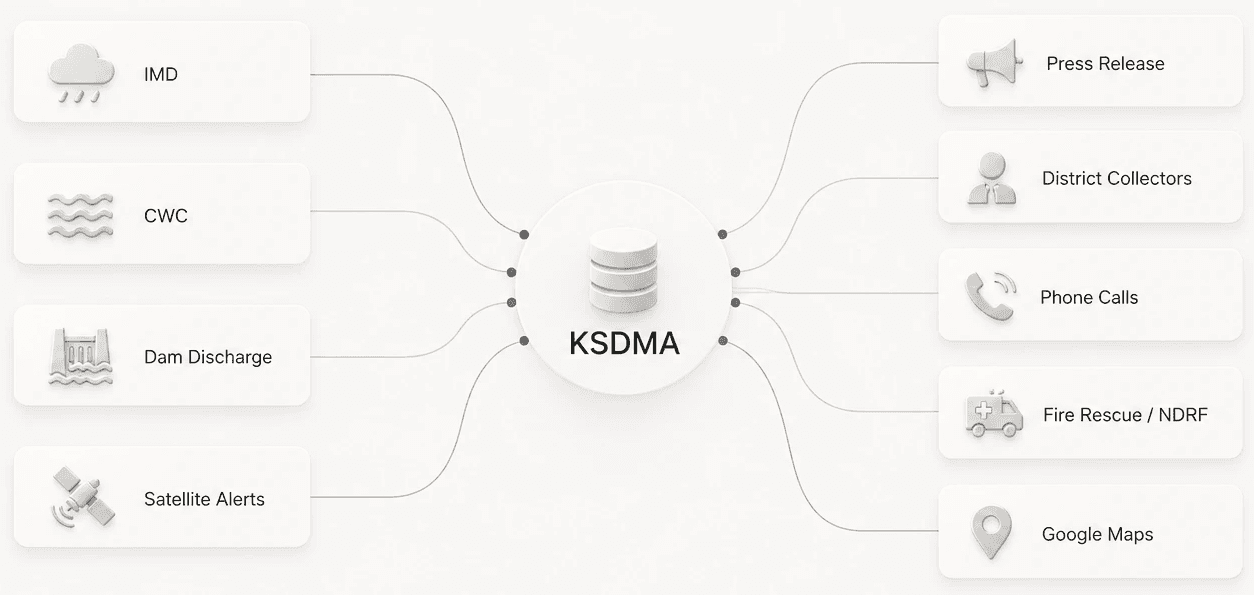
The critical gap
Data exists at the top. Decisions happen at the bottom. The translation between them is manual, slow, and inconsistent. No agency has a unified real-time view of where conditions are worst, which routes are viable, and where resources should go next.
The Problem Statement
Flood response requires fast coordination, but current systems rely on fragmented information, delayed communication, and reactive decision-making.
PART TWO:
How The World Does It
“Study the old masters. Enrich yourself with their ideas. Then find your own voice.”
- Deiter Rams
The Global Standard: What Effective Systems Actually Do
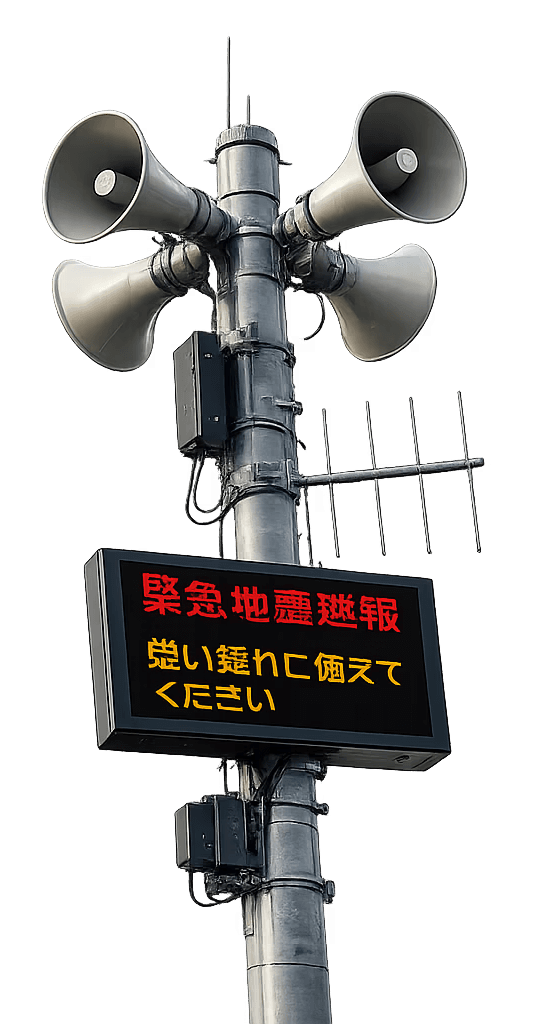
Japan
J-Alert
Disaster Risk Information Platform
Key operational principles
Prediction before failure
Shared operational awareness
Pre-computed risk zones
Multi-channel dissemination
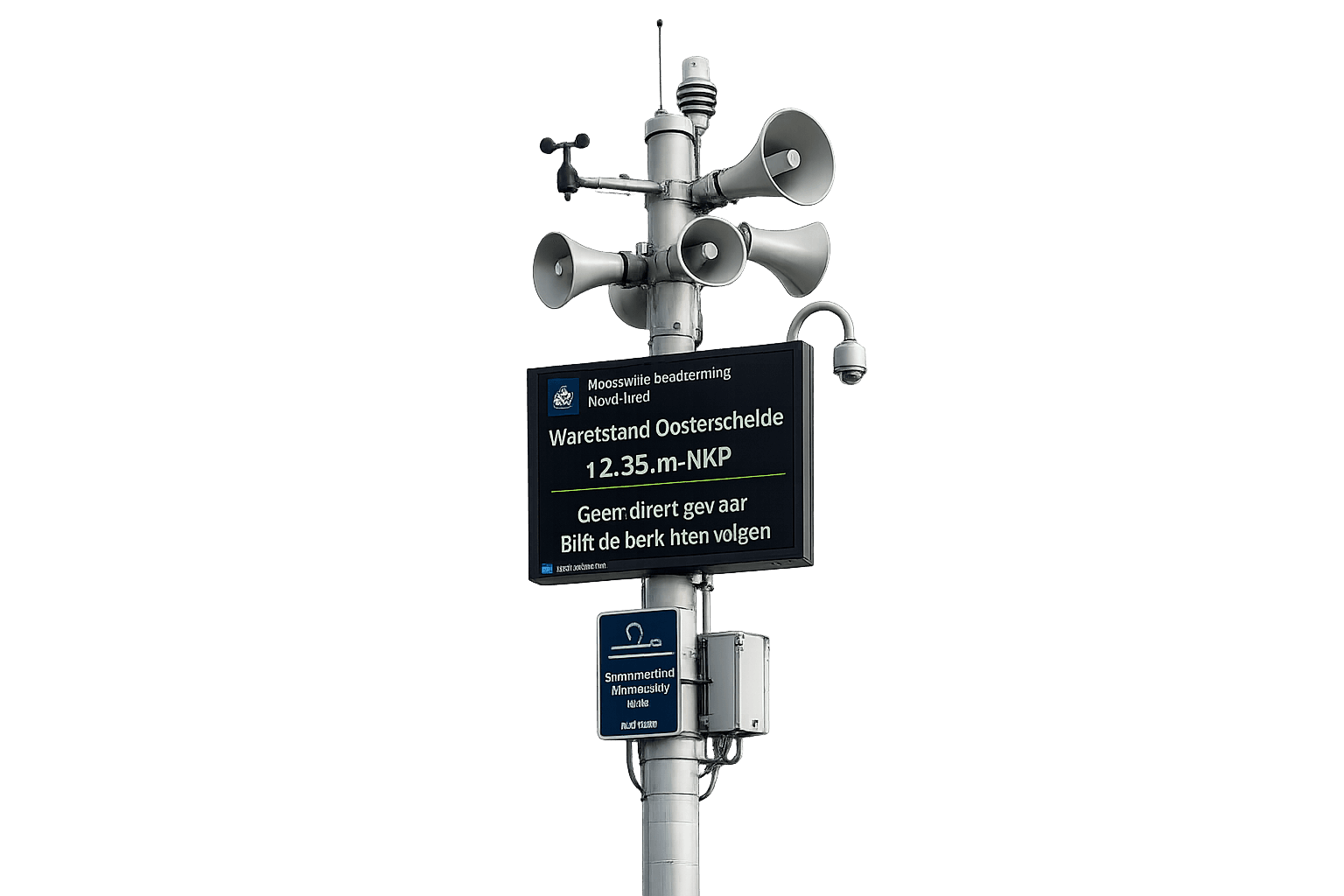
Netherlands
Flood Control 2015
Threshold-Triggered Protocols
Key operational principles
Automation
Role Execution
Pre-Assignation
Centralized Operation
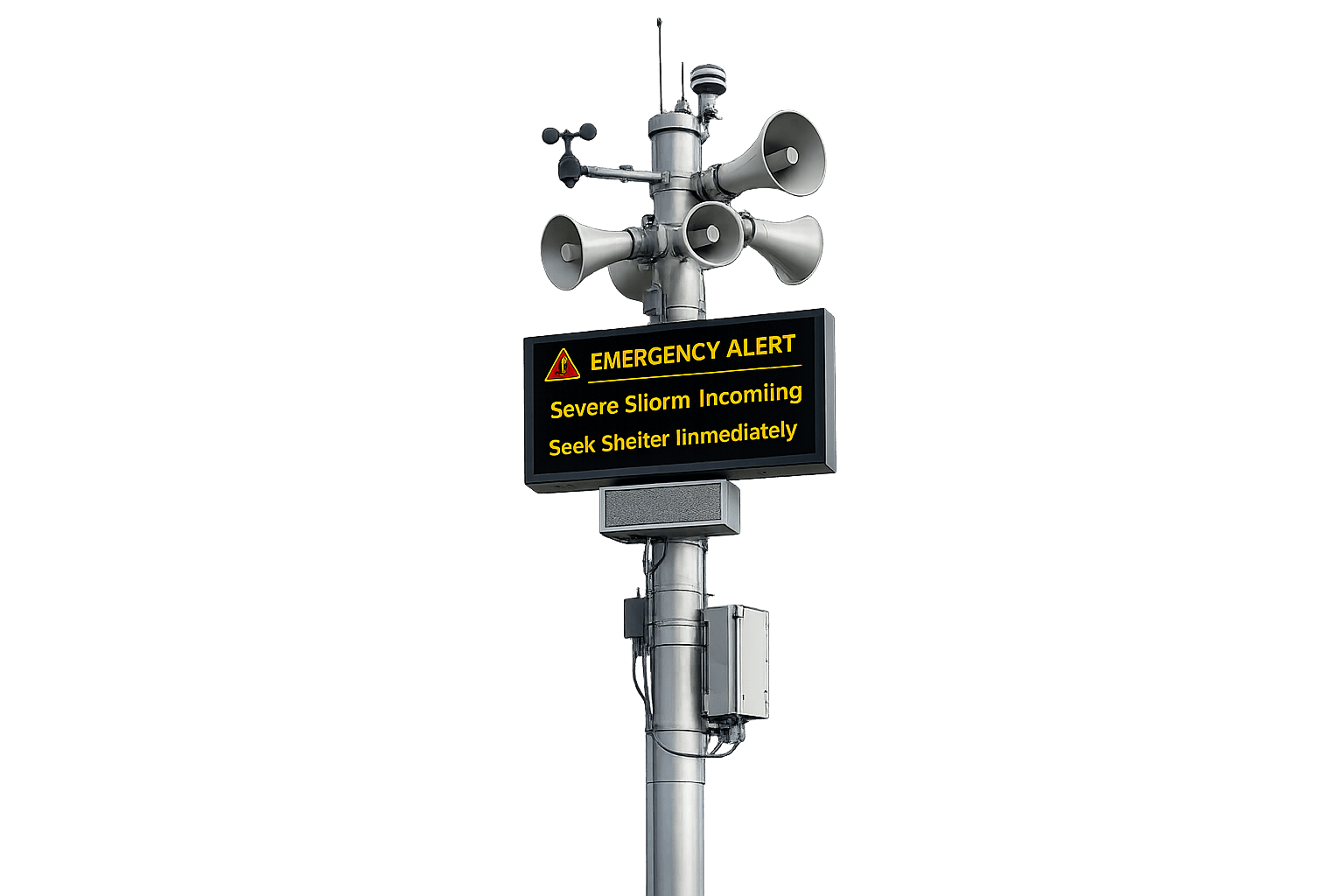
United States
IPAWS
Common Operating Picture (COP)
Key operational principles
Resource Positions
Predicted Impact Zones
Confirmed Incident Locations
Route Accessibility
The Comparison Table
Principle
Japan
Netherlands
USA
Kerala
Shared real-time operational view
✅
✅
✅
❌
Prediction before route failure
✅
✅
✅
❌
Pre-assigned decision protocols
✅
✅
✅
Partial
Unified multi-agency dashboard
✅
✅
✅
❌
Risk-aware navigation for responders
✅
✅
✅
❌
Public safety layer on maps
✅
✅
✅
❌
The fastest disaster response systems are not faster because vehicles move faster. They are faster because every person making a decision sees the same information, at the same time, with predictions already built in.
PART THREE:
The Solution
A coordinated response system designed to reduce uncertainty, improve decision-making, and help people navigate changing flood conditions in real time.
The Brief
A system that helps authorities understand emerging flood risks, prioritize vulnerable areas, and coordinate faster emergency response.
Introducing KSDMA Pulse
KSDMA Pulse is a centralized operational intelligence layer for flood response in Kerala.
What it does:
Detect
Identify emerging flood risks, vulnerable zones, and failing routes in real time.
Prioritize
Surface which areas, routes, and communities require immediate operational attention.
Coordinate
Support faster deployment decisions across agencies, responders, and districts.
How Does KSDMA Pulse Understand Flood Risk
Data Inputs
KSDMA Pulse is a centralized operational intelligence layer for flood response in Kerala.
What it does:
Rainfall Intensity (mm/hr)
IMD AWS Network,
ISRO MOSDAC Satellite.
Every 15 min
How much water is entering each basin.
River Gauge Readings (m)
CWC Telemetry Network.
Every 15 min
How close each river is to danger level
Dam Water Levels
Kerala State Electricity Board
(KSEB)
Real-time
Artificial flood surge risk downstream
Soil Moisture Index
ISRO Bhuvan/
NRSC
Daily
How much more rain water can the ground absorb
Digital Elevation Model
Survey of India/
Bhuvan 30m DEM
Static
Which areas flood when river rises by X meters
Road Network & Elevation
OpenStreetMap
ISRO Road Data
Weekly Update
Which roads are above/below flood thresholds
Historical Flood Zones
NRSC flood hazard atlas
Static Baseline
Which areas are historically more likely to flood
Field Distress Reports
KSDMA Helpline
District
As Recieved
Ground truth verification
How Are The Raw Signals Converted
This is the core of how KSDMA Pulse converts raw numbers into operational decisions
Step 1
Inundation Probability Score (IPS) per zone
Step 2
Route Viability Score (RVS) per road segment
Step 3
Priority Score per zone (for resource allocation)
IPS = w₁(R) + w₂(G) + w₃(D) + w₄(S) + w₅(H)
Where:
R = Rainfall intensity index (0–1, normalized against 100-year return period rainfall)
G = River gauge proximity index (current level / danger level threshold)
D = Dam discharge risk index (active discharge / basin capacity index)
S = Soil saturation index (current soil moisture / field capacity)
H = Historical hazard score (frequency of inundation in last 20 years, 0–1)
Weights (w₁–w₅) calibrated against 2018, 2019, 2020 flood inundation data:
w₁ = 0.30, w₂ = 0.28, w₃ = 0.22, w₄ = 0.12, w₅ = 0.08
Making Sense of Different Signals
Floods are not caused by a single event. A road may become dangerous because of:
1
Heavy Upstream
Rainfall
2
Rising River Levels
3
Dam Water Release
4
Ground Conditions
KSDMA Pulse combines these different signals to understand:
Which zones are becoming vulnerable?
Which roads may soon become unsafe?
Where emergency response may be needed next?
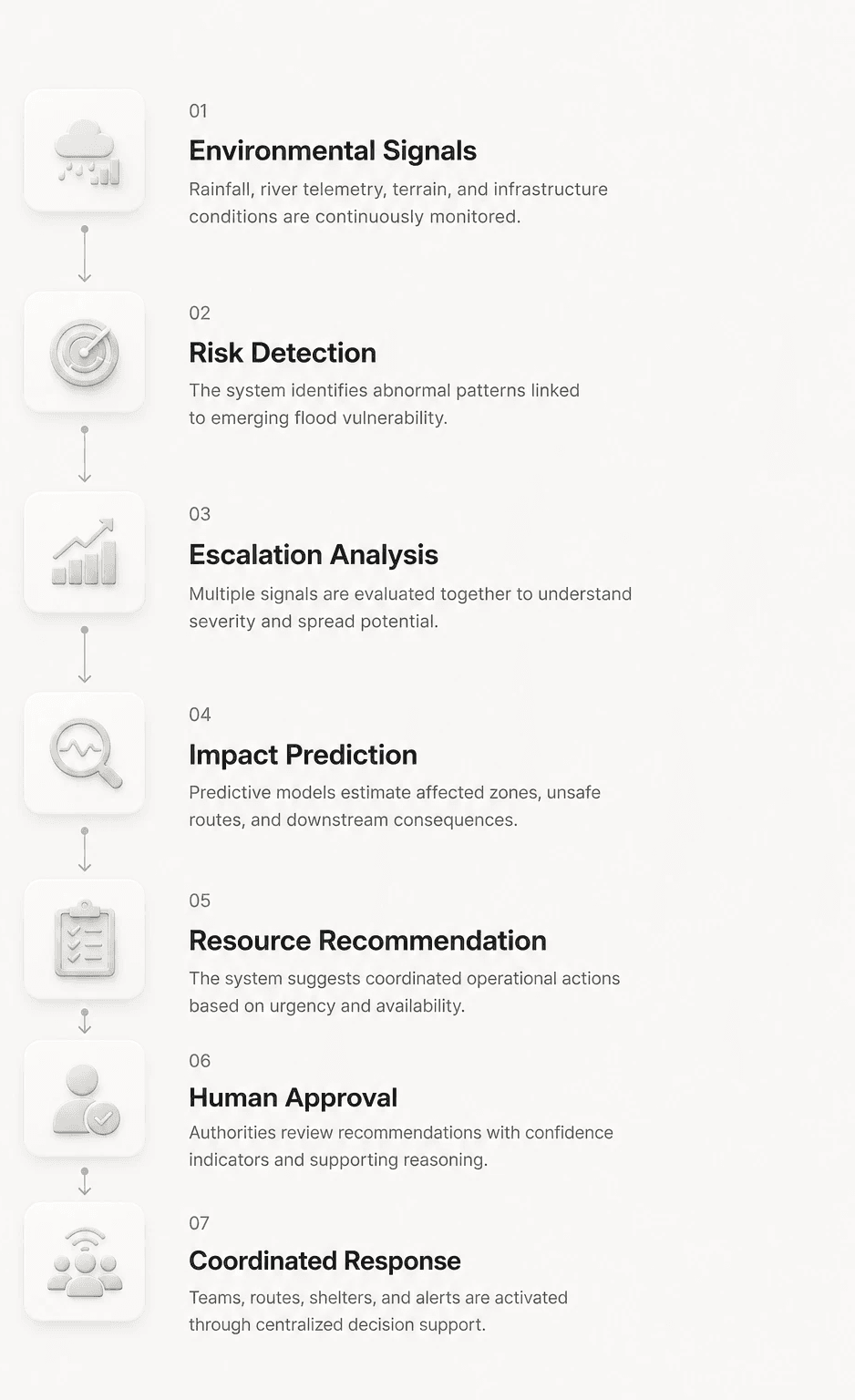
Decision Architecture
How the system will prioritize operational decisions during escalation
Not All Information Is Equally Certain
Flood conditions change rapidly, and not all incoming information is equally reliable. Some updates may be delayed, incomplete, or conflicting. Instead of hiding uncertainty, KSDMA Pulse communicates confidence levels alongside route recommendations and zone alerts.
High Confidence
Multiple data sources agree, historical pattern match is strong, IMD forecast confidence is ≥70%
Medium Confidence
When the information is delayed or partially has conflicting, sensor reading, forecast
Low Confidence
Data gaps or rapidly changing conditions reduce certainty.
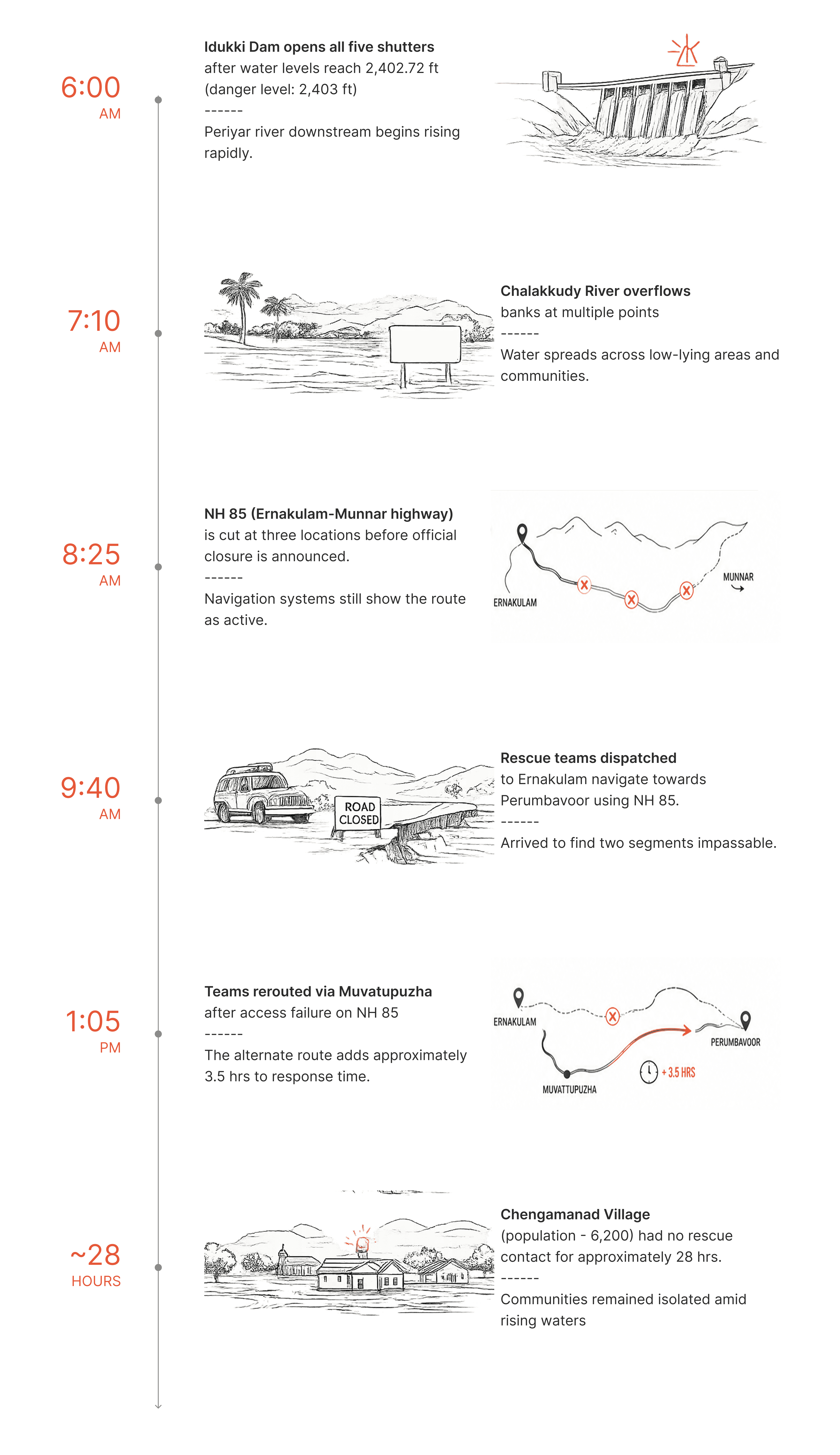
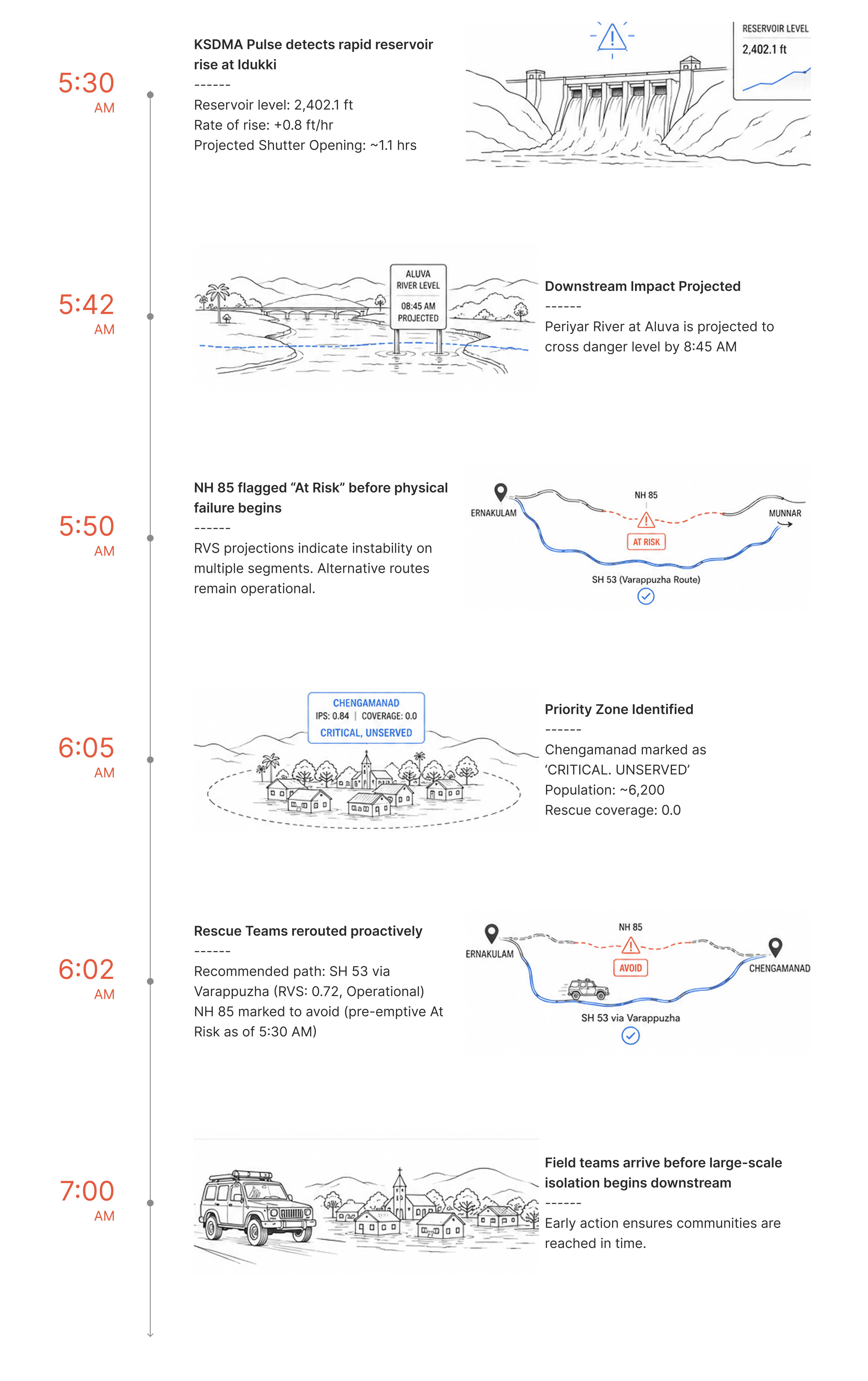
What Would Have Happened on August 15, 2018
To understand what KSDMA Pulse does concretely, walk through this scenario
Actual Events Timeline
What if Pulse was present then
Revised Timeline
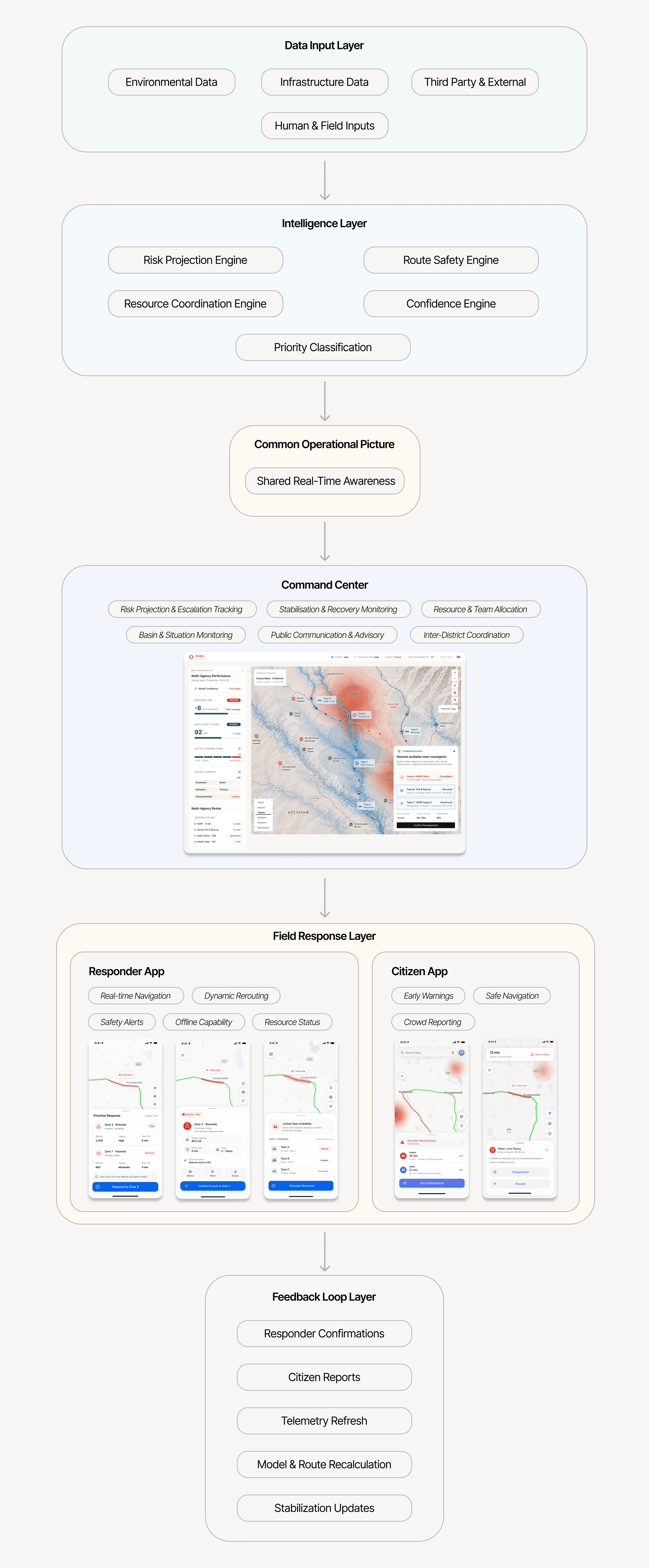
Operational Structure
PART FOUR:
The Interface
KSDMA Pulse for the Authority
The operational dashboard is the core of KSDMA Pulse. It is designed for district collectors, KSDMA controllers, and emergency operations centre coordinators.

KSDMA Pulse for the Responders
Rescue teams, ambulance drivers, and field coordinators receive a focused interface showing what matters for operational execution. This is explicitly not the core system. It is the execution layer that is the output of authority decisions, translated into actionable field guidance.

PART FIVE:
The Design
A coordinated response system designed to reduce uncertainty, improve decision-making, and help people navigate changing flood conditions in real time.
The Design Framework
The design of KSDMA Pulse followed a framework derived from operational decision support research, specifically the Recognition-Primed Decision (RPD) model developed by Gary Klein, used extensively in military command systems and emergency management.
The core insight from RPD: Under time pressure, experienced decision-makers do not evaluate options. They pattern-match to the situation and act on the first workable option. The system's job is to surface the right pattern, not to force a comparative decision. This shaped the design in three specific ways:
Confidence-First
Communication
Embedded Audit Trail
Status Before, Options
Who will 'Pulse' Support
Pulse is designed to support the different teams involved in flood monitoring, coordination, and emergency response across Kerala. Each role interacts with the system differently based on their operational responsibilities.
State Emergency Operations Center
Fire & Rescue / NDRF /SDRF Teams
Public Communication Teams
District Collectors
Dam & Water Authority
Field Response Teams
System States and Edge Cases
Low Confidence Data
Sensor offline >45 min, conflicting readings
Zone flagged with amber indicator; last known state retained; authority alerted to data gap
Resource Exhaustion
All nearby units deployed
Priority Score recalculates to surface highest-impact reallocation; neighbouring district resource request auto-drafted
Dam Discharge Event
KSEB reports sudden shutter opening
Downstream cascade calculation runs immediately; affected zones flagged Critical; affected routes pre-emptively flagged At Risk
Rapid Escalation
ΔIPSt > 0.15/hour
Escalation alarm surfaced to authority; predicted critical time shown; automatic route re-evaluation triggered
Offline Responder
No connectivity
Cached last operational snapshot (route + zone status) displayed from local storage
PART SIX:
The Impact
A coordinated response system designed to reduce uncertainty, improve decision-making, and help people navigate changing flood conditions in real time.
What KSDMA Pulse Could Change
Based on documented failures in the 2018-2024 Kerala floods and the operational improvements demonstrated by comparable systems:
1
Faster Response Initiation
2
Reduced Duplicate Dispatchments
3
Route Efficiency
4
Pre-emptive Intervention
What Comes Next
Based on documented failures in the 2018-2024 Kerala floods and the operational improvements demonstrated by comparable systems:
1
Multi-hazard Adaptation
2
Crowd-sourced Ground Verification
3
Automated Public Alerts
4
Statewide Response Network