What happens when digital fraud succeeds not because users don't know, but because they are pressured to act quickly?
Digital fraud increasingly relies on emotional manipulation, urgency, and trust rather than technical vulnerabilities. Existing systems detect threats, but fail to intervene at the moment users are most vulnerable.
SAVDHAAN
Designing a Real-Time Device-Level Fraud Prevention System
PRODUCT DESIGN · BEHAVIORAL UX · TRUST & SAFETY · MOBILE UX · SYSTEM DESIGN

Introduction
I explored how users fall into digital fraud not due to lack of awareness, but due to moments of urgency, emotional pressure, and trust manipulation. This project investigates a real-time, device-level safety layer that detects risk signals and nudges users before harmful actions occur.
Role
Product & UX Designer (Collaborative Project · Team of 2)
Timeline
3 week (Exploration 2 + Refinement 1)
Responsibilities
My Contributions
Opportunity Framing & Domain Research • UX Strategy & Concept Development • Information Architecture • Interaction Flow Design
Collaborative Work
Ideation & Brainstorming • User Flow Validation • Design Iterations • Solution Refinement
Tools Used
Figma • Figma Make • Miro • Adobe Illustrator
Team
Product & UX Designer - Aswanth C
Product & UX Designer - Sarga Manoj
Overview
Digital fraud increasingly succeeds not because users lack awareness, but because they are pressured into quick decisions. Fraudsters exploit urgency, authority, and trust across calls, messages, and payment requests, creating moments where users act before thinking.
SAVDHAAN explores a real-time, device-level safety layer that detects contextual risk signals and gently nudges users before harmful actions occur. Designed with a privacy-first approach, the system aims to intervene at the moment of vulnerability while preserving user autonomy and dignity. By shifting from detection to behavioral intervention, SAVDHAAN focuses on preventing fraud before it happens.
Feature title.
This is a feature description spanning a couple of lines.
Feature title.
This is a feature description spanning a couple of lines.
Why This Matters
Digital fraud is rapidly evolving, targeting users through calls, messages, and payment requests. While awareness campaigns and spam detection systems exist, fraud often succeeds during moments of urgency and emotional manipulation. Users are pressured to act quickly, leaving little time to verify information or recognize warning signs.
In such situations, even informed users can make impulsive decisions. This highlights the need for real-time intervention that supports users at the moment of vulnerability, rather than relying solely on awareness or post-fraud recovery.
₹1 lakh+
Typical loss in digital fraud cases
< 30 sec
Decision time during scam calls
3+
Calls, Messages, Links, Payments
Current Experience
Awareness Without
Intervention
Users are informed about scams but receive no support during risky situations.
Reactive Warnings
Spam detection systems warn too late or are easily ignored.
Fragmented Protection
Calls, messages, and payments operate independently without unified safety.
Emotional Manipulation
Fraud exploits urgency, trust, and authority to influence decisions.
The Problem
Digital fraud increasingly relies on behavioral manipulation rather than technical vulnerabilities. Fraudsters create urgency and exploit trust across calls, messages, and payment requests, pressuring users into quick decisions.
Existing solutions focus on detection or awareness but fail to intervene at the moment users are most vulnerable. As a result, users often proceed with risky actions before recognizing the threat, leading to preventable financial and emotional loss.
Metaphor
Digital fraud increasingly relies on behavioral manipulation rather than technical vulnerabilities. Fraudsters create urgency and exploit trust across calls, messages, and payment requests, pressuring users into quick decisions.
Existing solutions focus on detection or awareness but fail to intervene at the moment users are most vulnerable. As a result, users often proceed with risky actions before recognizing the threat, leading to preventable financial and emotional loss.
Experiential Needs
Real-Time Awareness
Users need timely signals when a situation appears risky.
Gentle Intervention
Safety nudges should guide users without creating fear or panic.
Privacy-First Protection
Detection should respect user privacy and avoid intrusive monitoring.
Unified Safety Layer
Protection should work across calls, messages, links, and payments.
Design Intent
AWARENESS
Detect risk signals in real time and surface contextual alerts.
TRUST
Maintain privacy, transparency, and user control.
Support decision-making without blocking or forcing actions.
AUTONOMY
How might we prevent digital fraud by supporting users at the moment of vulnerability, while preserving their autonomy and privacy?
Expected Impact
Reduced Impulsive Decisions
Encouraging users to pause before
acting.
Early Fraud
Prevention
Intervening before financial loss occurs.
Increased User Confidence
Supporting users in uncertain
situations.
Privacy-Respecting Safety
Providing protection without intrusive monitoring.
Designing a Real-Time Safety Layer for Fraud Prevention
SAVDHAAN functions as a real-time, device-level safety layer that detects contextual risk signals across calls, messages, links, and payments. Instead of blocking actions, the system introduces gentle nudges designed to slow decisions and prevent fraud while preserving user autonomy and privacy.
System Overview
SAVDHAAN operates as a real-time safety layer that detects contextual risk signals, evaluates severity, and introduces behavioral nudges before harmful actions occur. The system adapts intervention based on risk level while preserving user autonomy and privacy.
Risk Detection
Identifies suspicious signals across calls, messages, links, and payments.
Context Evaluation
Analyzes behavioral cues such as urgency, unfamiliar contacts, and unusual activity.
Behavioral Nudge
Introduces subtle prompts to slow decision-making.
Escalation & Support
Provides additional safeguards for high-risk scenarios.
How SAVDHAAN Works
SAVDHAAN operates through a layered system that detects risk signals, evaluates context, and intervenes with subtle behavioral nudges before harmful actions occur.
Risk Detection
Identifies suspicious patterns such as unknown calls, urgent payment requests, suspicious links, and unusual interactions.
Context Evaluation
Analyzes behavioral signals like urgency, unfamiliar contacts, and financial actions to determine risk level.
Safety Nudge
Introduces gentle prompts that encourage users to pause and reconsider before proceeding.
Escalation & Support
Offers additional verification options such as trusted contacts or delayed actions for high-risk scenarios.
Key Scenarios
SAVDHAAN supports users across common fraud situations by detecting risk signals and providing contextual nudges.
Suspicious Call
Unknown caller requests urgent payment
↓
SAVDHAAN detects risk signals
↓
Gentle warning appears
↓
User pauses and verifies
Suspicious Link
User clicks unfamiliar link
↓
SAVDHAAN flags suspicious domain
↓
Safety nudge appears
↓
User decides safely
Payment Risk
User attempts high-risk payment
↓
SAVDHAAN detects unusual behavior
↓
Confirmation nudge
↓
User reconsiders
Guardian Escalation
User repeatedly ignores warnings
↓
SAVDHAAN suggests trusted contact
↓
Additional support provided
Final Outcome
SAVDHAAN functions as a real-time, device-level safety layer that detects contextual risk signals across calls, messages, links, and payments. Instead of blocking actions, the system introduces gentle nudges designed to slow decisions and prevent fraud while preserving user autonomy and privacy.
Suspicious Call Nudge
A long-distance riding layout designed for comfort and planning. The interface emphasizes fuel range, trip information, ETA, and navigation while keeping speed and alerts clearly visible.
Long Rides
Comfort & Range
Suspicious Link Warning
A terrain-focused layout designed for low-speed control and stability. The interface prioritizes traction information, incline indicators, and terrain-relevant data.
Rough Terrain
Adventorous
Payment Risk Alert
A contextual overlay that appears during active navigation. The interface highlights turn directions, distance, and route guidance while minimizing non-essential information.
High-speed Riding
Minimal Distractions
Performance Focus
Gentle Pause Prompt
A distraction-free layout triggered at higher speeds. The interface reduces visual complexity, showing only essential information such as speed, alerts, and navigation cues.
High-speed Riding
Minimal Distractions
Performance Focus
Escalation Suggestion
A priority-based notification screen that surfaces safety-critical information such as low fuel, engine warnings, or hazards. Alerts are designed to be glanceable and minimally intrusive.
High-speed Riding
Minimal Distractions
Performance Focus
Safety Settings
A temporary interface that appears when changing riding modes. The layout highlights available modes and confirms selection without disrupting riding focus.
High-speed Riding
Minimal Distractions
Performance Focus
Trust Explanation Screen
A minimal overlay for incoming calls or notifications. The interface provides essential information while ensuring minimal distraction.
High-speed Riding
Minimal Distractions
Performance Focus
Guardian Setup Screen
A minimal overlay for incoming calls or notifications. The interface provides essential information while ensuring minimal distraction.
High-speed Riding
Minimal Distractions
Performance Focus
Post-Fraud Support
A minimal overlay for incoming calls or notifications. The interface provides essential information while ensuring minimal distraction.
High-speed Riding
Minimal Distractions
Performance Focus
Learning Nudges
A minimal overlay for incoming calls or notifications. The interface provides essential information while ensuring minimal distraction.
High-speed Riding
Minimal Distractions
Performance Focus
Designing
For
Risk Contexts
Designing for Risk Contexts
Unlike traditional spam detection systems, fraud scenarios are dynamic and context-dependent. Users encounter risk across calls, messages, links, and payment interactions, each requiring different levels of intervention.
To better understand these situations, common fraud scenarios were broken down into key contexts where user behavior and risk levels vary.
Suspicious Calls
Characterized by urgency, authority, and emotional manipulation. Users are pressured to act quickly during live conversations.
Urgency Signals
Unknown Callers
Authority Claims
Immediate Payment Requests
Suspicious Links
Characterized by phishing messages and fake websites. Users often click unfamiliar links without verification.
Unknown Domains
Impersonation Messages
Fake Login Pages
Malicious Downloads
Payment Risk
Characterized by unusual or rushed payment requests. Users may proceed without verifying the recipient.
High Value Transfers
Unusual Recipients
First-Time Payments
Urgent Transactions
Repeated Risk Behavior
Characterized by users ignoring warnings or interacting with suspicious sources repeatedly.
Ignored Warnings
Repeated Suspicious Activity
Escalation Needed
Trusted Contact Intervention
Insight
Risk levels change depending on user context and behavior. A static warning system fails to address these dynamic situations effectively.
This led to the exploration of a context-aware safety layer that adapts intervention based on risk level and user behavior.
Risk-Based Intervention Strategy
Fraud scenarios vary in severity and urgency. A static warning system either becomes intrusive or ineffective. To address this, SAVDHAAN adapts its intervention based on risk level and user behavior.
Risk Levels
Low Risk: Awareness
Situations that may indicate potential risk but require minimal intervention.
Unknown calls
Unverified links
First-time interactions
Suspicious language patterns
Intervention
Soft notification
Subtle visual cue
Non-intrusive prompt
Medium Risk: Gentle Intervention
Situations with stronger fraud indicators.
Urgent request
Impersonation signals
Suspicious behavior
Repeated suspicious activity
Intervention
Modal warning
Pause suggestion
Verification prompt
̌High Risk: Escalation
Situations with high fraud probability.
Large payment attempt
Repeated warnings
Fraud pattern
Unusual behavior
Intervention
Strong alert
Delay option
Trusted contact suggestion
Additional confirmation
Addaptive Behaviour
SAVDHAAN adjusts intervention based on Call contexts, Message contexts, Payment contexts, Link interactions etc.
Adaptive Triggers
Call-Based Triggers
Unknown caller
Urgent tone
Payment request
Payment-Based Triggers
Large transaction
First-time recipient
Unusual behavior
Link-Based Triggers
Suspicious domain
Shortened links
Fake login pages
Behavioral Triggers
Ignored warnings
Repeated risk behavior
Rapid decision patterns
Trust & Privacy Design
Fraud prevention requires monitoring user interactions, making trust and privacy critical. SAVDHAAN is designed with a privacy-first approach that minimizes intrusion while maintaining effective protection.
Trust & Privacy Design
On-device Detection
Processing happens locally to preserve privacy
User Control
Users choose protection level
Transparent Nudges
Clear explanation for alerts
Non-Intrusive Monitoring
Only risk-based triggers
Behavioral Nudge Design
Instead of blocking actions, SAVDHAAN introduces subtle behavioral nudges that encourage users to pause and reconsider.
Soft Nudges
Primary controls are placed on the handlebar for quick and safe interaction.
Pause Prompts
Haptic feedback provides non-visual confirmation for rider interactions.
Verification Nudges
Controls adapt based on riding conditions.
Escalation Nudges
Controls adapt based on riding conditions.
Moodboard
















Visual Identity
JetBrains Mono
———————————————————————
Secondary Typeface
Manrope
Manrope is used as the primary text typeface for its open letterforms, balanced geometry, and calm visual tone that support effortless reading with minimal cognitive load.
JetBrains Mono is used for numerical information, chosen for its fixed-width structure, clear digit differentiation, and high legibility in motion, ensuring critical values such as speed, RPM, and system data are instantly readable under dynamic riding conditions.
——
—————————————————
Regular
Bold
ABCDEFGHIJKLMNOPQRSTUVWXYZ
abcdefghijklmnopqrstuvwxyz
Thin
Regular
Medium
Bold
Medium Italic
2
2
2
2
2
FEBF05
000000
2F2F2F
FF0000
9F9F9F
FEEDB9
The yellow-amber on black palette was chosen for its high WCAG-compliant contrast (~13:1), ensuring strong glanceability across dust, haze, rain spray, glare, and night riding, while reducing cognitive load. Fog-resilient hue improves readability in low-visibility conditions, supports color-blind accessibility through shape redundancy, and establishes a clear alert hierarchy with amber for mid-level warnings and red for critical states.
Design Process
Designing a next-generation instrument cluster required balancing glanceability, adaptability, and minimal cognitive load. The process involved iterative exploration of layout structures, information hierarchy, and contextual behavior.
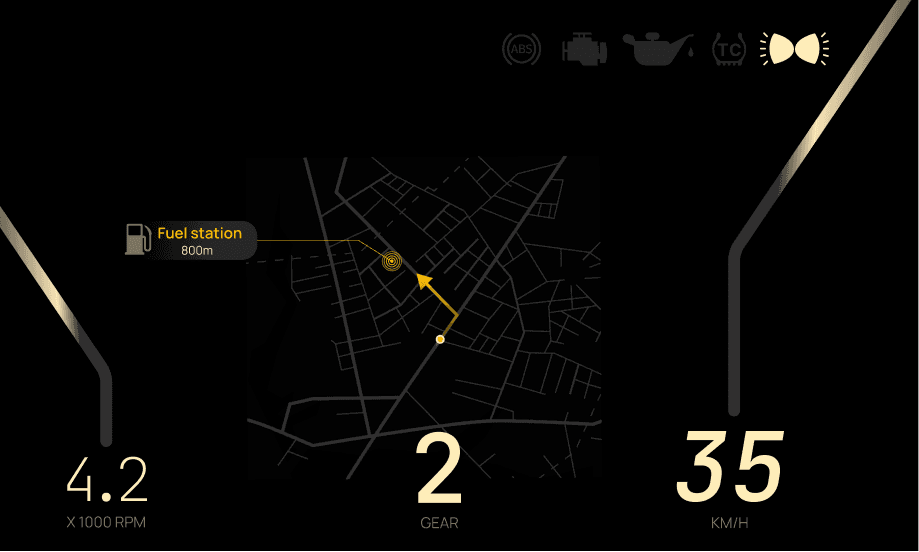
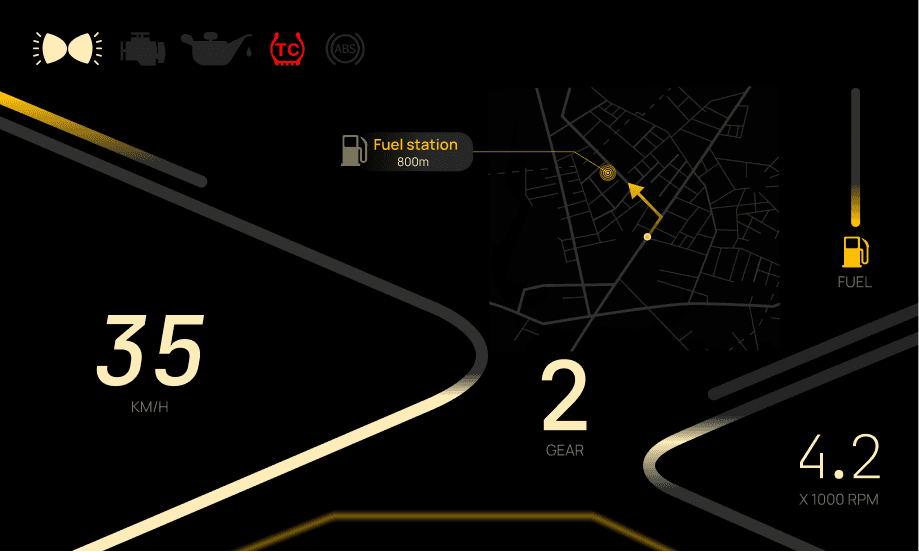
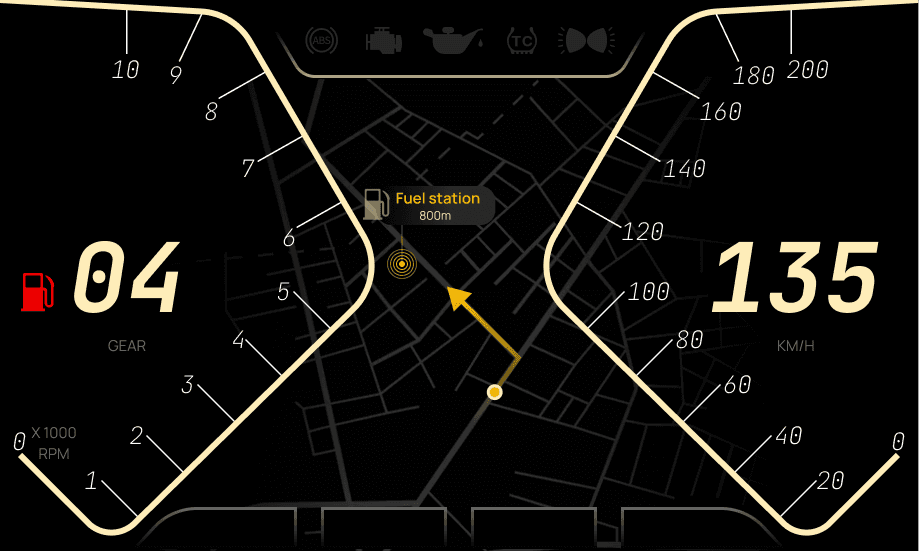
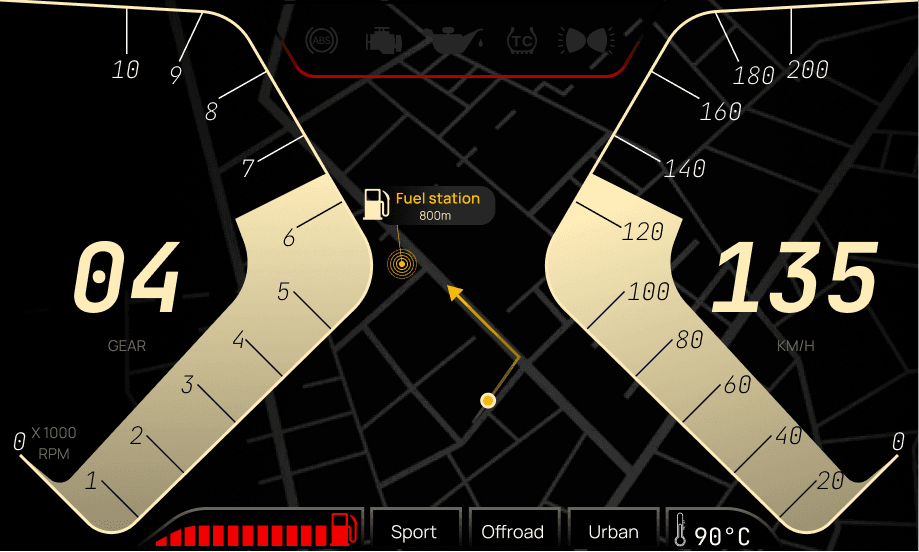
Early Explorations
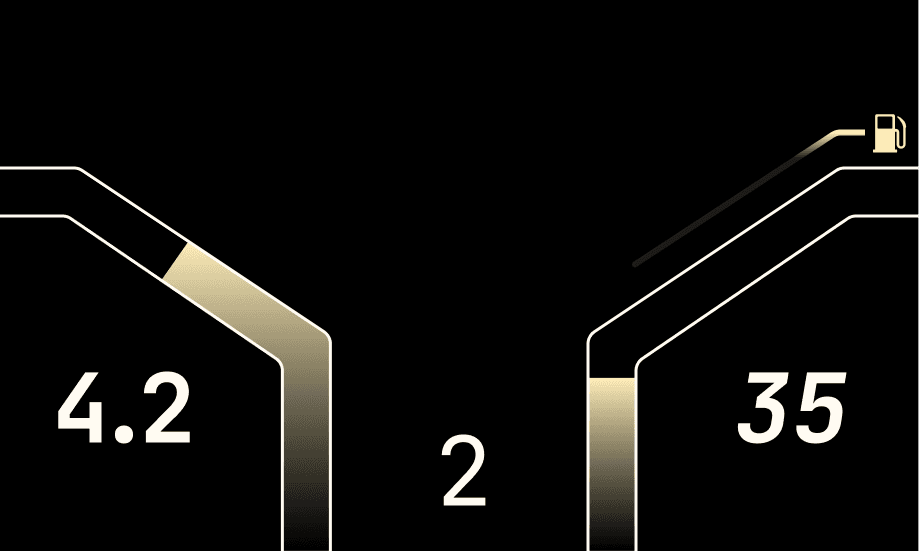
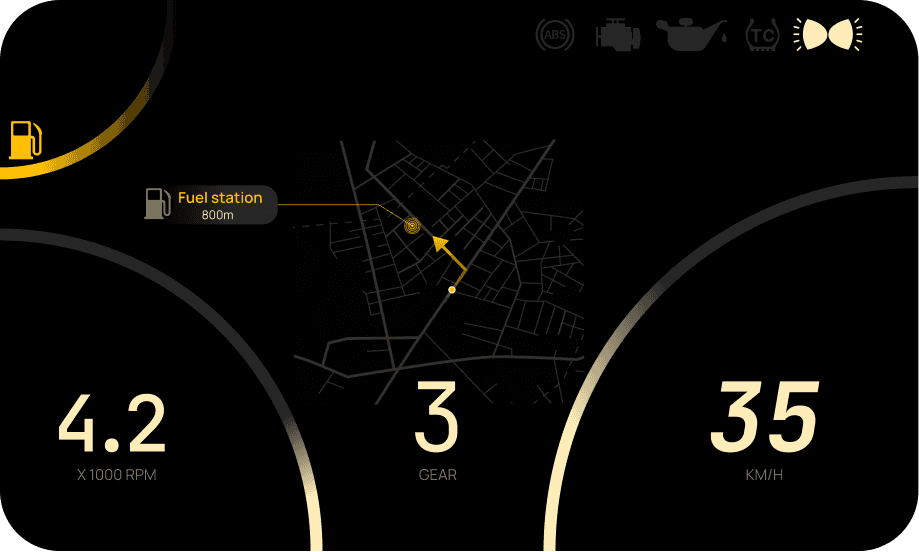
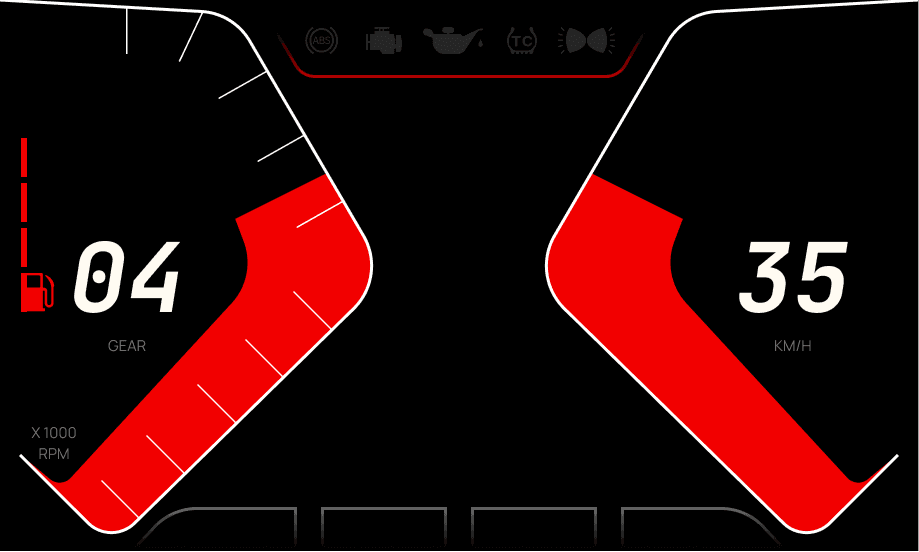
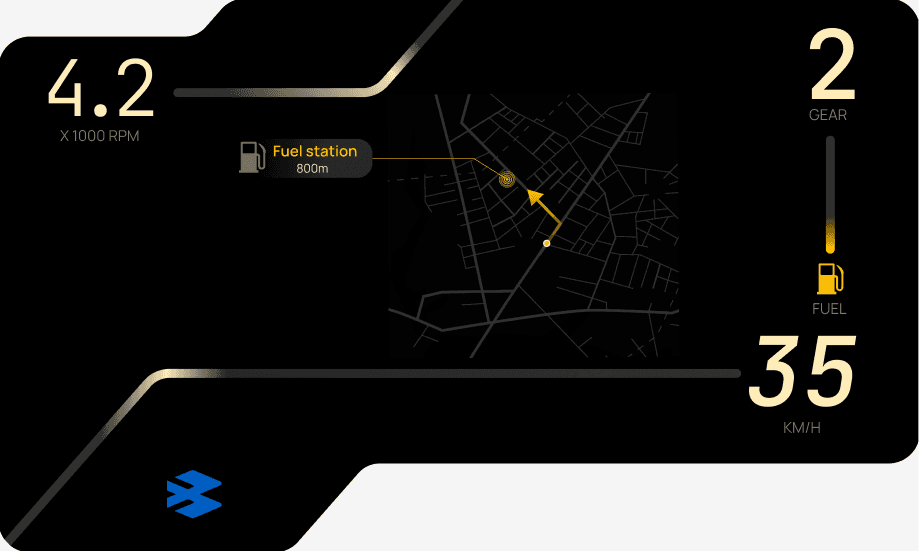
The process began by exploring how riders consume information while riding. Initial explorations focused on identifying the most critical data points and experimenting with layout variations that emphasized speed, navigation, and alerts.






Future-Facing Opportunities
SAVDHAAN can evolve into a broader digital safety ecosystem with additional capabilities.
OS-Level Integration
Native phone-level protection
AI-Enhanced Detection
Improved pattern recognition
Community Fraud Signals
Shared fraud database
Smart Guardian Network
Family protection layer
Reflection
Designing a next-generation instrument cluster required balancing performance, safety, and adaptability within a constrained visual space. Unlike traditional UI projects, this challenge involved designing for high-speed environments where attention is limited and decisions must be made quickly.
One of the key learnings from this project was the importance of glanceability and information hierarchy. Early explorations revealed that visually dynamic layouts often reduced readability, leading to a shift toward simpler and more stable structures. Prioritizing speed, minimizing distractions, and positioning secondary information in peripheral areas became central to the design approach. Another important insight was the role of context-aware interfaces. Instead of designing static layouts, the system evolved into an adaptive interface that responds to riding conditions such as speed, navigation, and riding modes. This approach helped reduce cognitive load and improve rider awareness. Designing for eyes-free interaction also shaped many decisions. The introduction of handlebar controls, haptic feedback, and minimal interaction patterns ensured that riders could interact safely without diverting attention from the road.
This project also highlighted the importance of balancing visual appeal with functional clarity. While performance-inspired visuals added character, maintaining readability remained the primary focus throughout the process.
Overall, this project strengthened my understanding of designing for real-world constraints, emphasizing safety, clarity, and adaptability in high-speed environments.