Tangible Data Visualisation exploring and reflecting the 'Fading Lifeforms of the Wild'
Fading Out to Extinction
Tsngible Data Visualization
DURATION
4 Weeks
ROLE
Solo - End to End
DOMAIN
Sustainability
TYPE
Data Visualization
Status
Speculative Visualization
At a Glance
WHY?
To date, more than 169,420 species have been assessed for The IUCN Red List, off which more than 47,000 species are threatened with extinction that is 28% of all assessed species.

26% of Mammals

41% of Amphibians

34% of Conifers

11% of Birds

38% of Sharks & Rays

28% of Selected Crustaceans

44% of Reef Corals

71% of Cycads

11% of Reptiles
INDIAN CONTEXT
India is one of the 17 megadiverse countries, home to nearly 8% of the world’s recorded species. Yet, rapid habitat loss, pollution, overexploitation, and climate change have put many species at risk. According to the IUCN Red List, 680+ Indian species are currently threatened, including iconic animals like the Great Indian Bustard, the Ganges River Dolphin, and several freshwater fish and amphibians.
SCOPE
100 species from the IUCN Red List (2020 assessment) that are native to India and fall under threatened categories (NT, VU, EN, CR) were collected initially and further narrowed step-by-step:
Relevance to SDGs
Data Availability
Geographic Representation
Taxonomic Diversity
Avoiding Flagship Bias
DATA COLLECTION
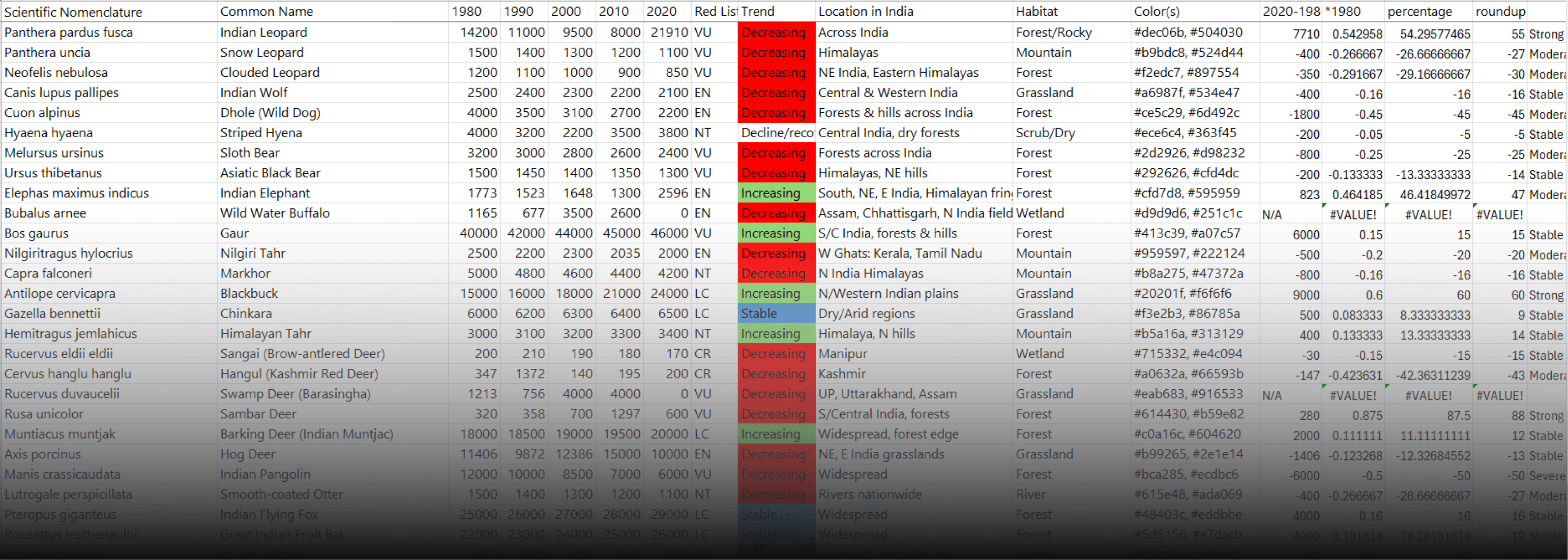
The data collected is heavily reliant on IUCN Red List and Living Planet Index, other than these, Government Reports, Published papers etc. were also used.
"The Complaint Call"
Time Frame:
1970-2020(the available dataset as most of the conservation activities started from 1970).
"The Complaint Call"
Data Points:
Species Name, Taxonomy, Population Estimates, Trends, Habitats, Red List Status.
Data Points:
Species Name, Taxonomy, Population Estimates, Trends, Habitats, Red List Status.
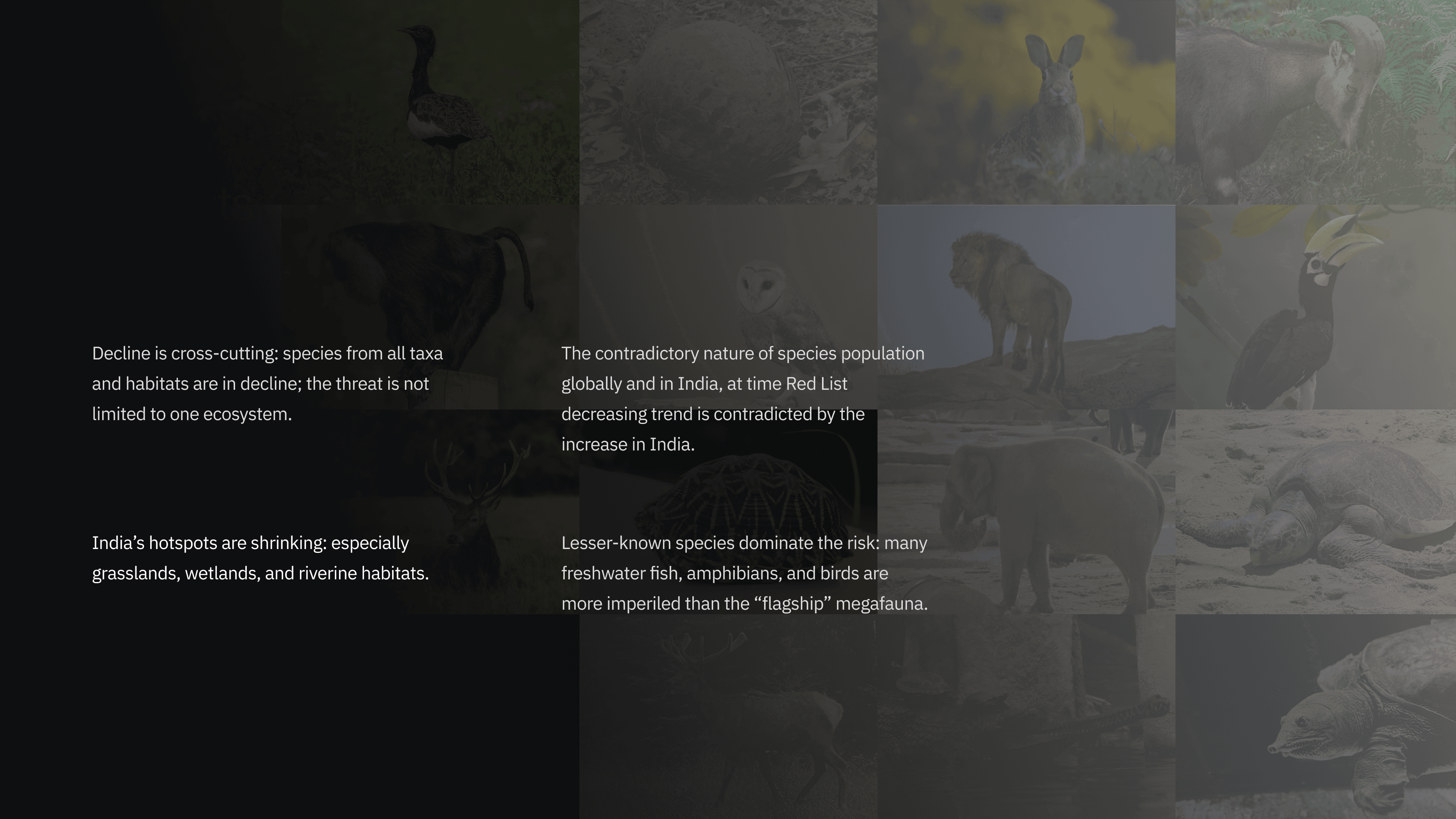
“Across every habitat, life is fading out. Can we still think of extinction as someone else’s problem?”
DELIBERATIONS
The approach was to go as wide as possible without thinking of the material or space constraints. Interactivity, Affordance, Sustainability, Portability etc. were some of the areas that i stretched out a bit further. Also the no.of species is further scoped down to 24 for the practicality of the visualization.
SCALE
MATERIAL
METAPHOR
MEDIUM
INTERACTION
IDEATIONS
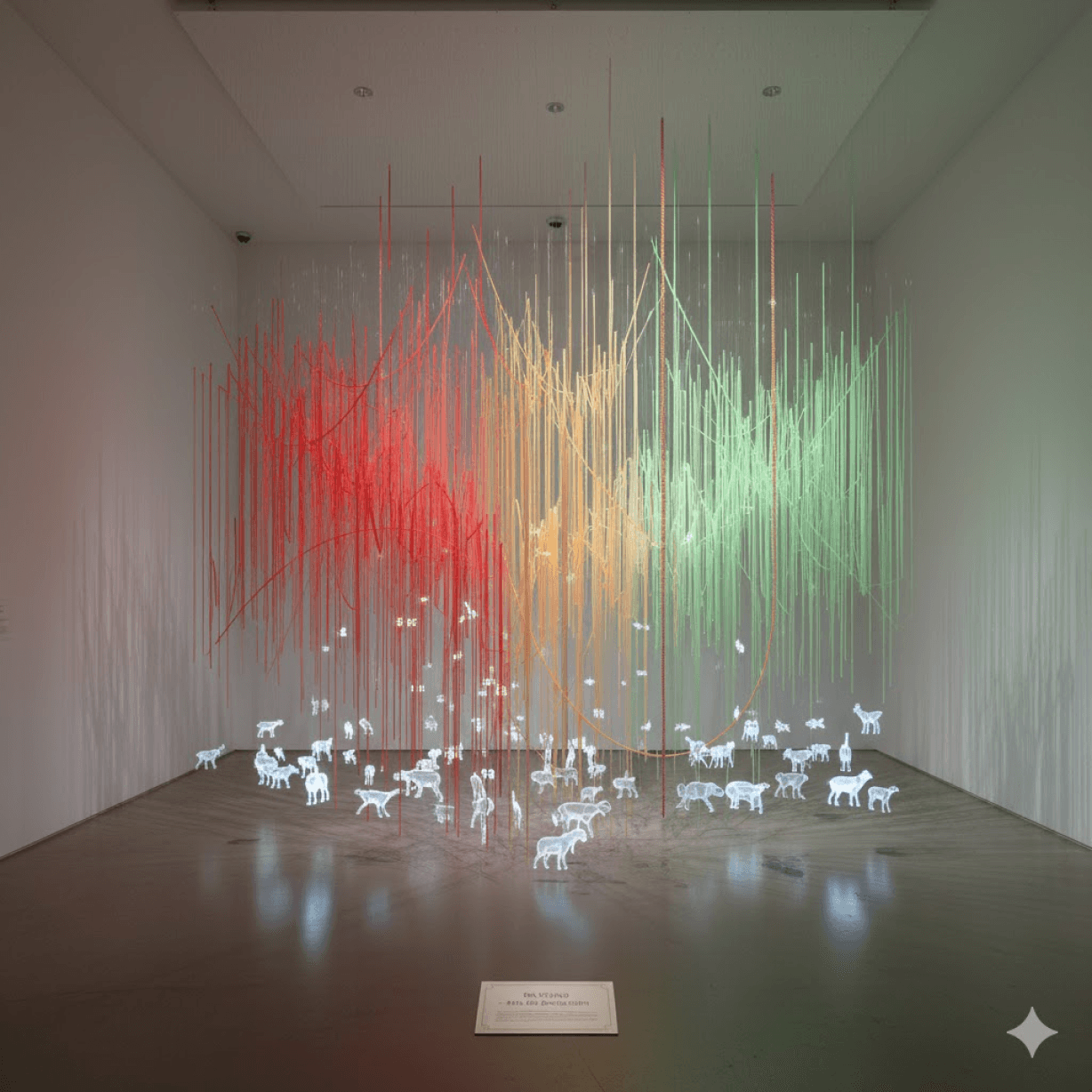
On Strings
Visualizes species populations and conservation status through suspended threads in a vertical space. Each species is represented by a thread or cord, which is:
Length / Height: The distance from the ground corresponds to extinction risk.
Thickness / Density: Represents the population size.
Color: Indicates the IUCN Red List conservation status

The Tree
This tangible visualization represents the conservation status of a selection of species as assessed in 2020, using a tree as a metaphor. Each species is depicted as a leaf.
Leaves on the tree: Represent species of least concerned.
Leaves hanging or falling from the tree: Represent species that are Vulnerable, Endangered.
Leaves on the ground: Represent species that are Extinct, emphasizing their loss from the ecosystem.
Life Cards
To show the fragility of the entire system itself, where each card is required and has role in the overall system. If even one card disappears the entire system, collapses. Each card representing one animal.
The size of the card are based on the absolute numbers, and the card size changes based on the percentage change. So each of the 3 structures will be different and the strength declining from structure to structure.

FINAL CONCEPT
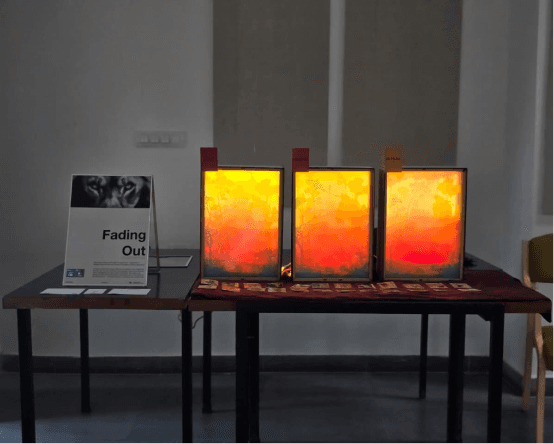
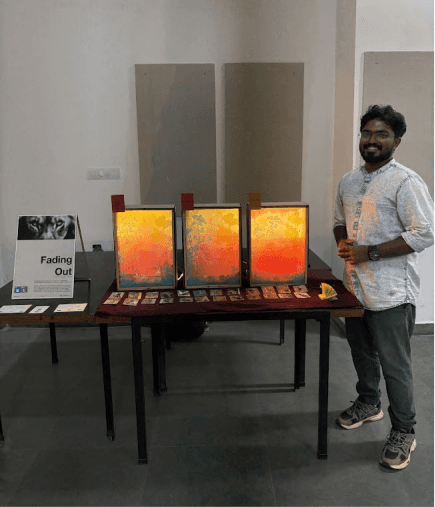
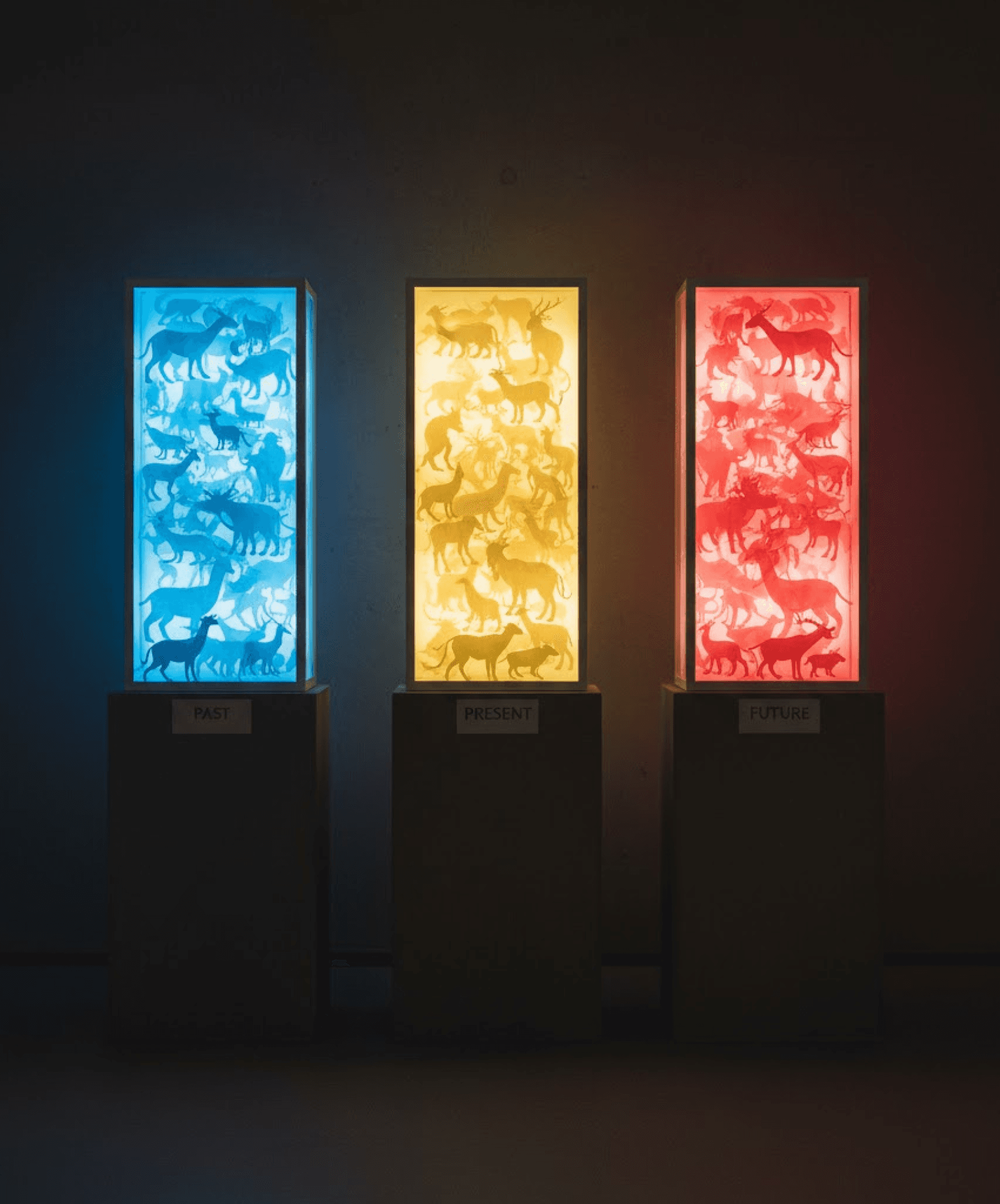
FADING OUT
"The Complaint Call"
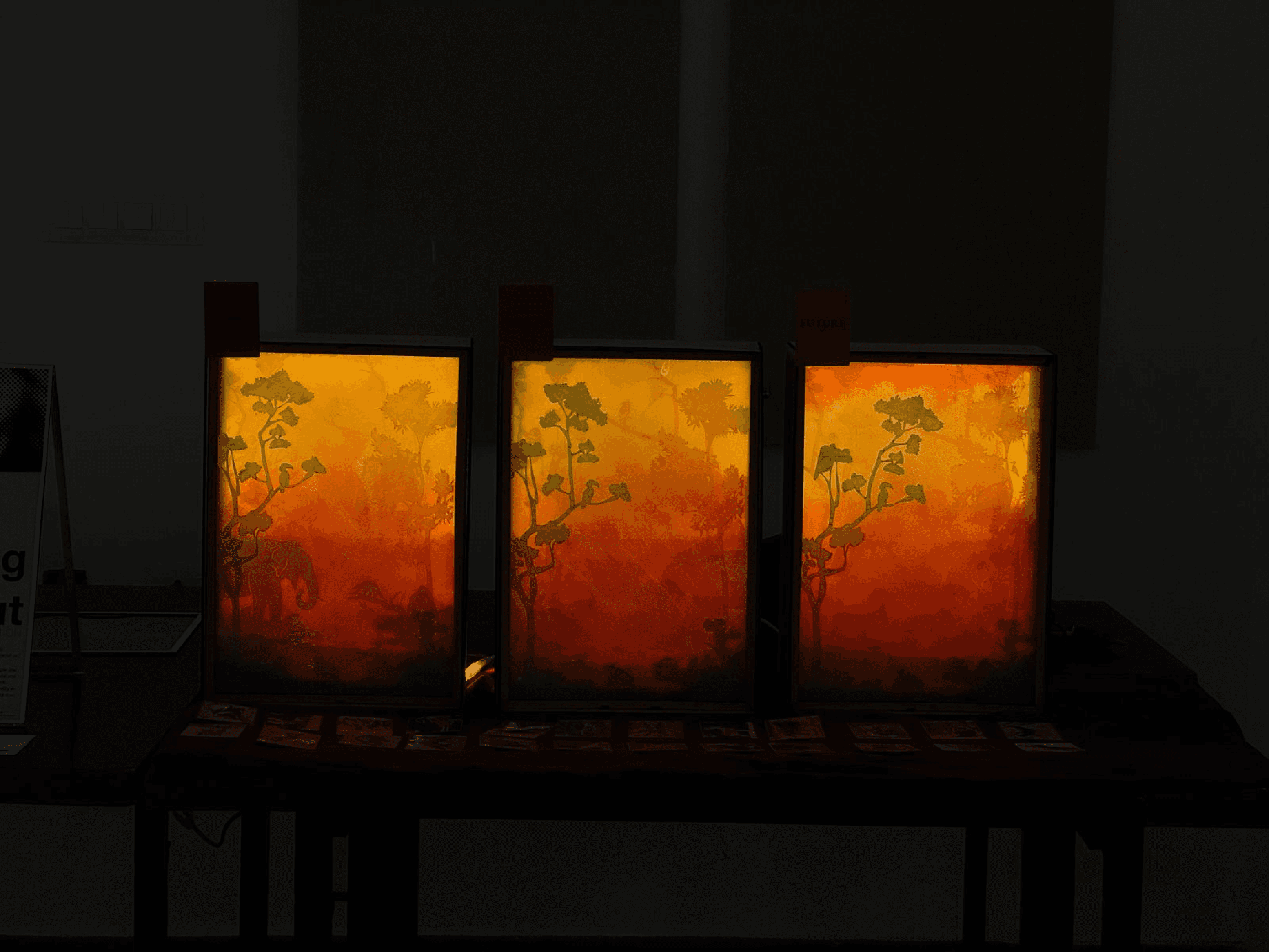
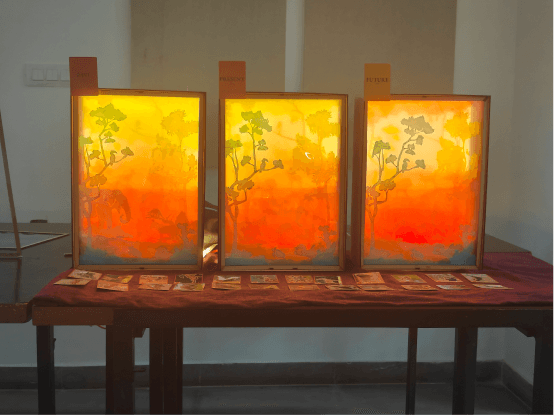
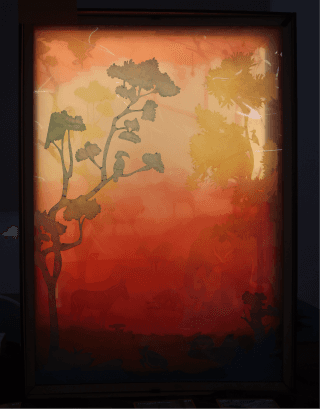
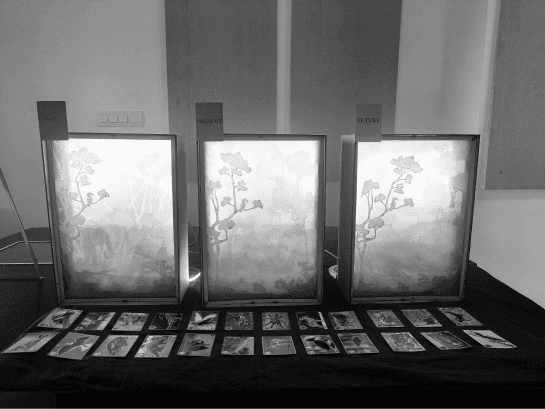
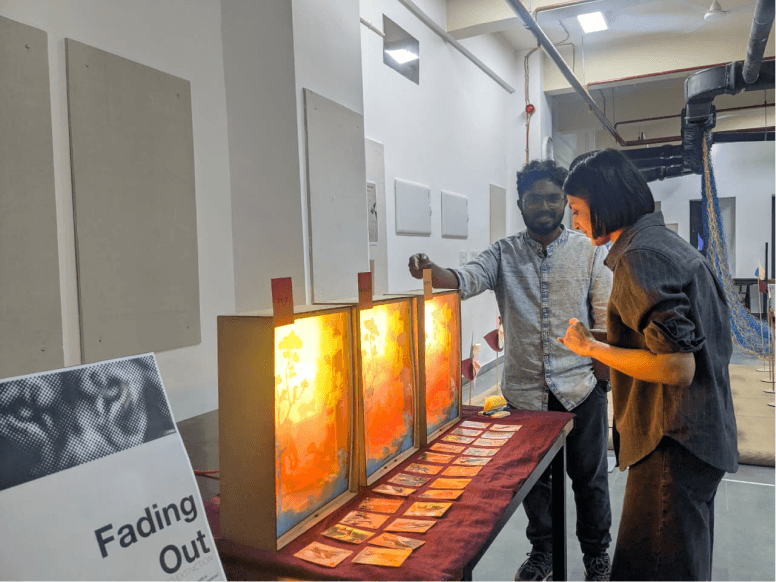
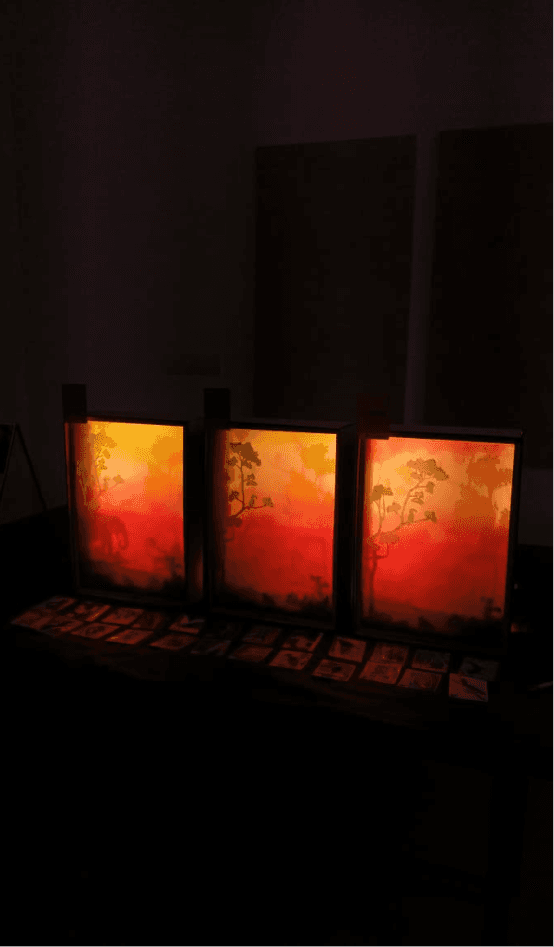
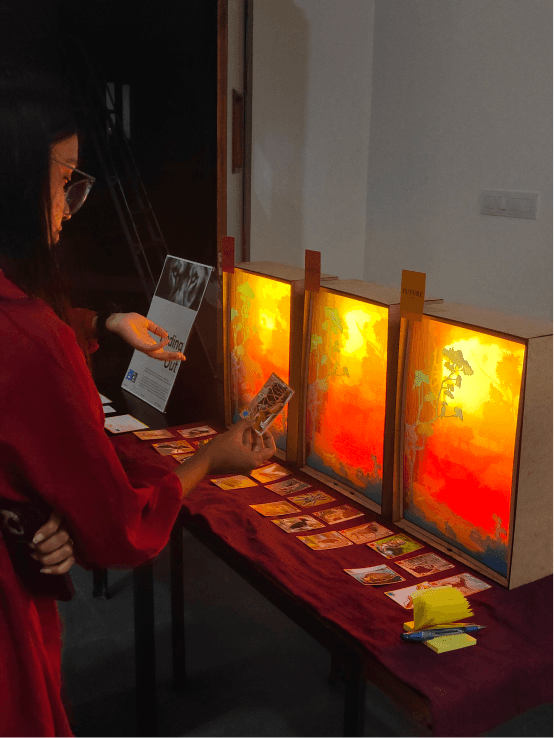
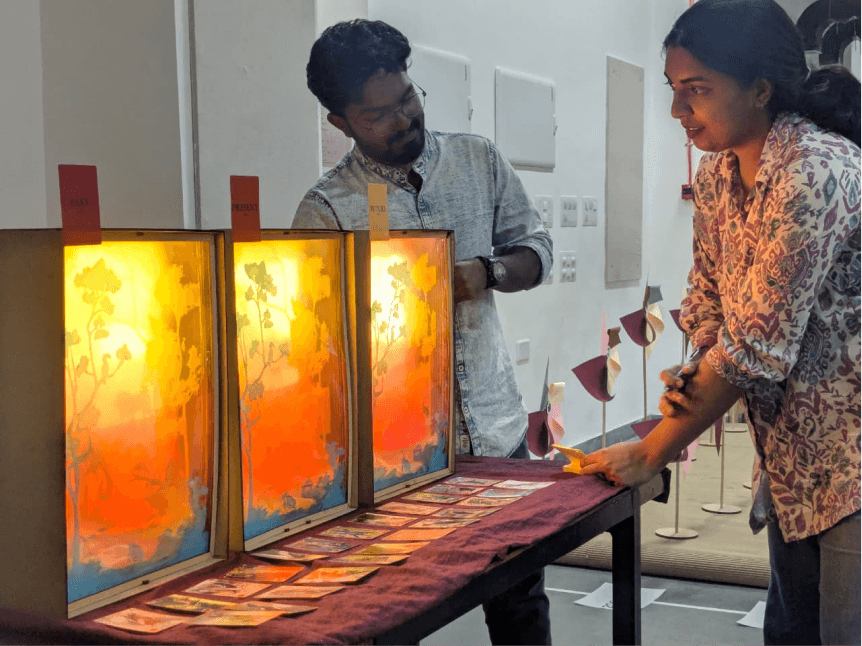
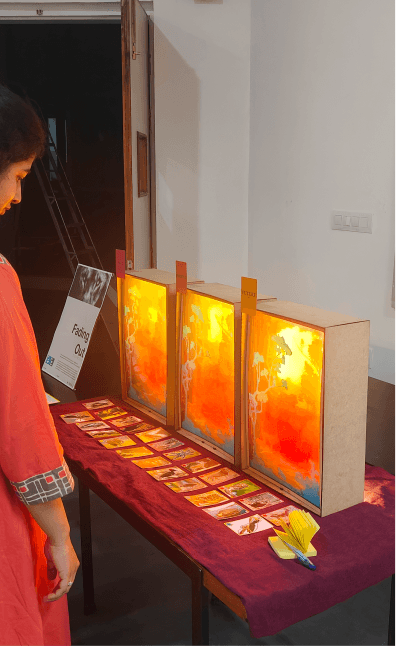
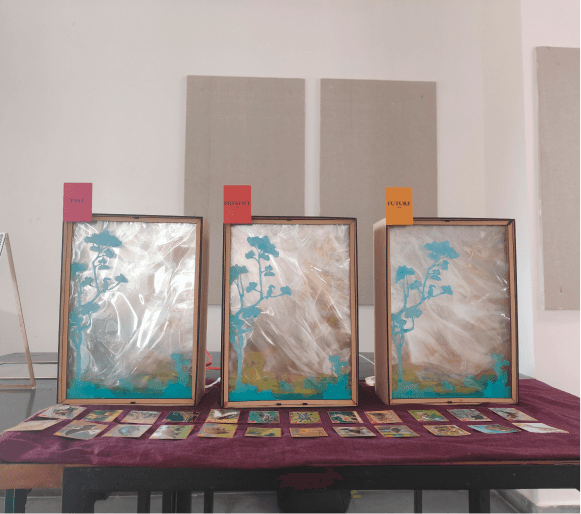
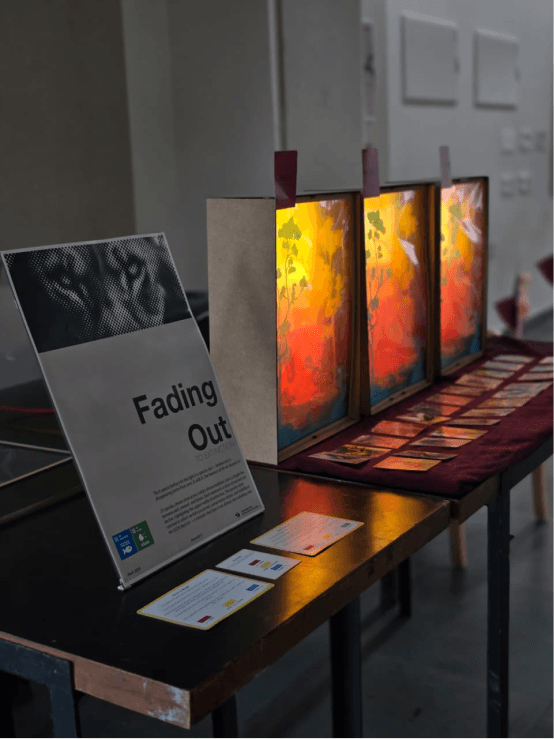
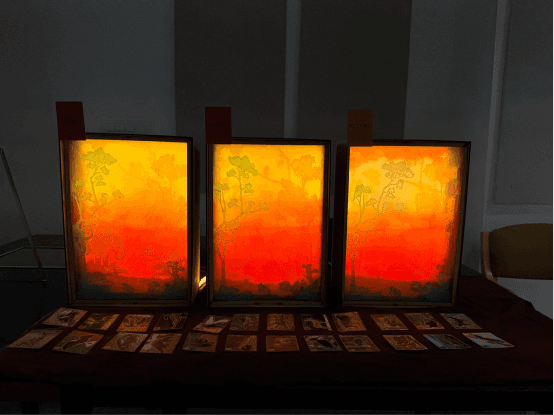
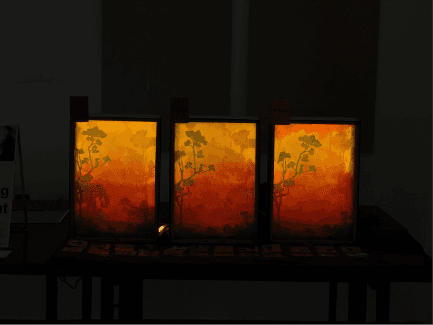
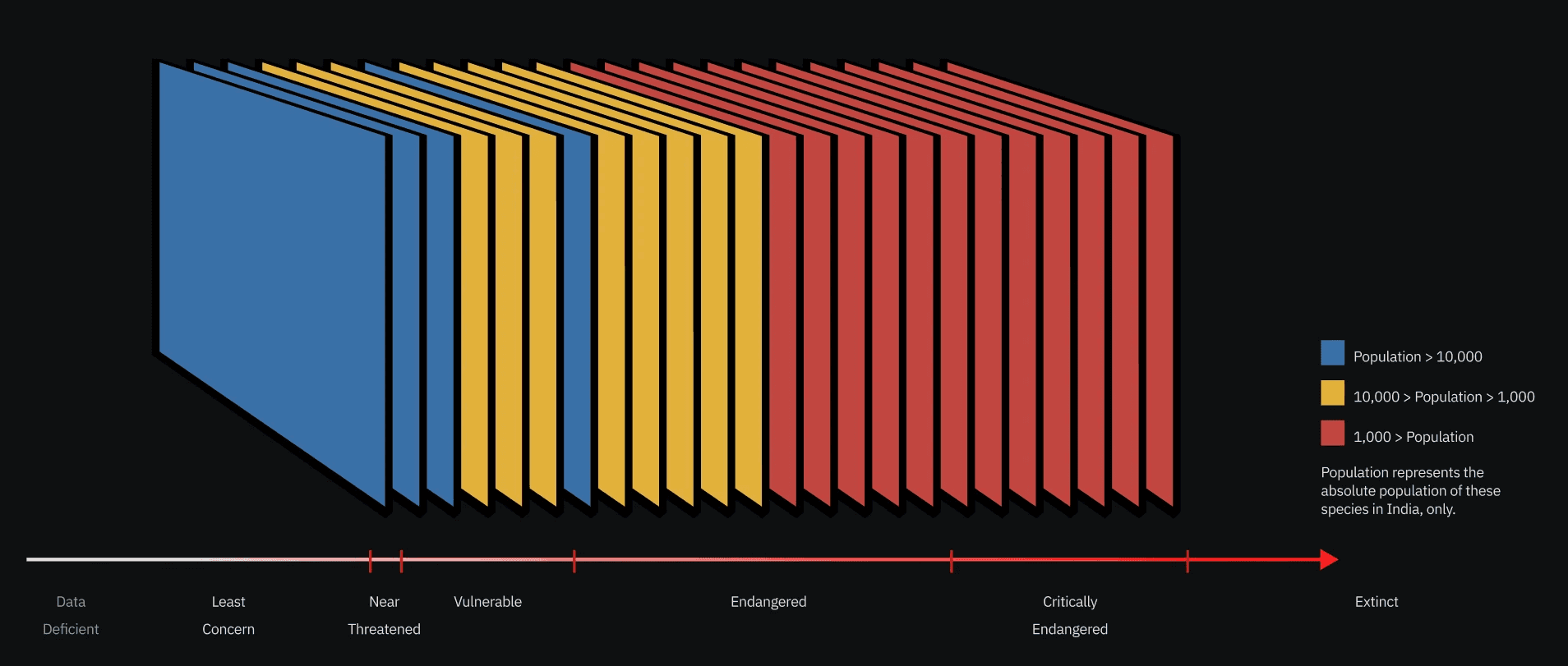
Three boxes each representing the past, present and future. Containing and representing the condition of the 24 species that are selected with the predefined criterions. Each species represented in one layer, the arrangement according to the Red List Assessment. The deeper into the box and closer to the light source the closer they are to extinction.
INSPIRATION
"The Complaint Call"
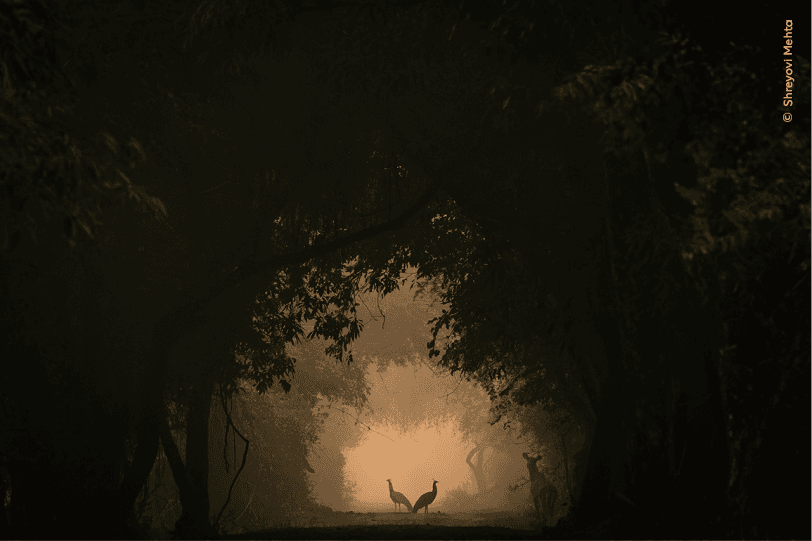
In the Spotlight
by Sheyovi Mehta
Silhouettes of animals and fading away. Award winning photography.

Curiosity Cloud
by Michel Traxler
Creatures of different habitats that would never meet in real life at the same space

Paper Cut Lightbox
Google Images(Art to Fit)
Aesthetics, Lighting and Material.
DATA
Monitoring Layer
Dataset Overview
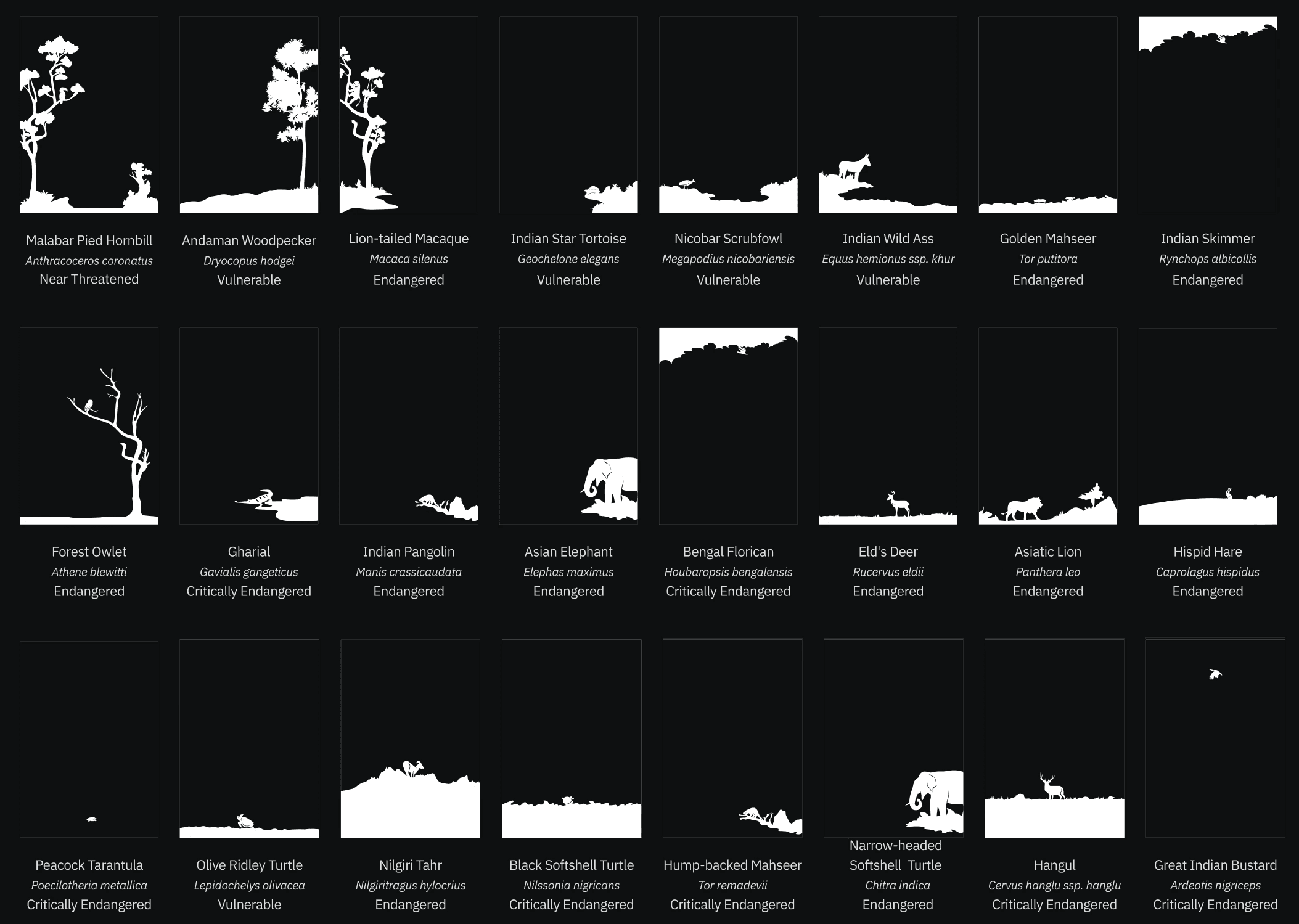
24 species were selected from the IUCN Red List, representing various taxonomic groups and habitats across India.
Selection avoided flagship species to highlight lesser-known yet equally threatened ones.
Data was taken from the 2020 assessment.
Dataset Overview
Common Name
Scientific Name
IUCN Category
1970 Population
2020 Population
2070 Population (Projected)
Data Representation
Data Decoding
24 layers representing 24 species, each arranged back to back according to the Red List assessment.
The further backwards the specie is in the arrangement, the closer they are to extinction
Final Model:
Fading Out to Extinction